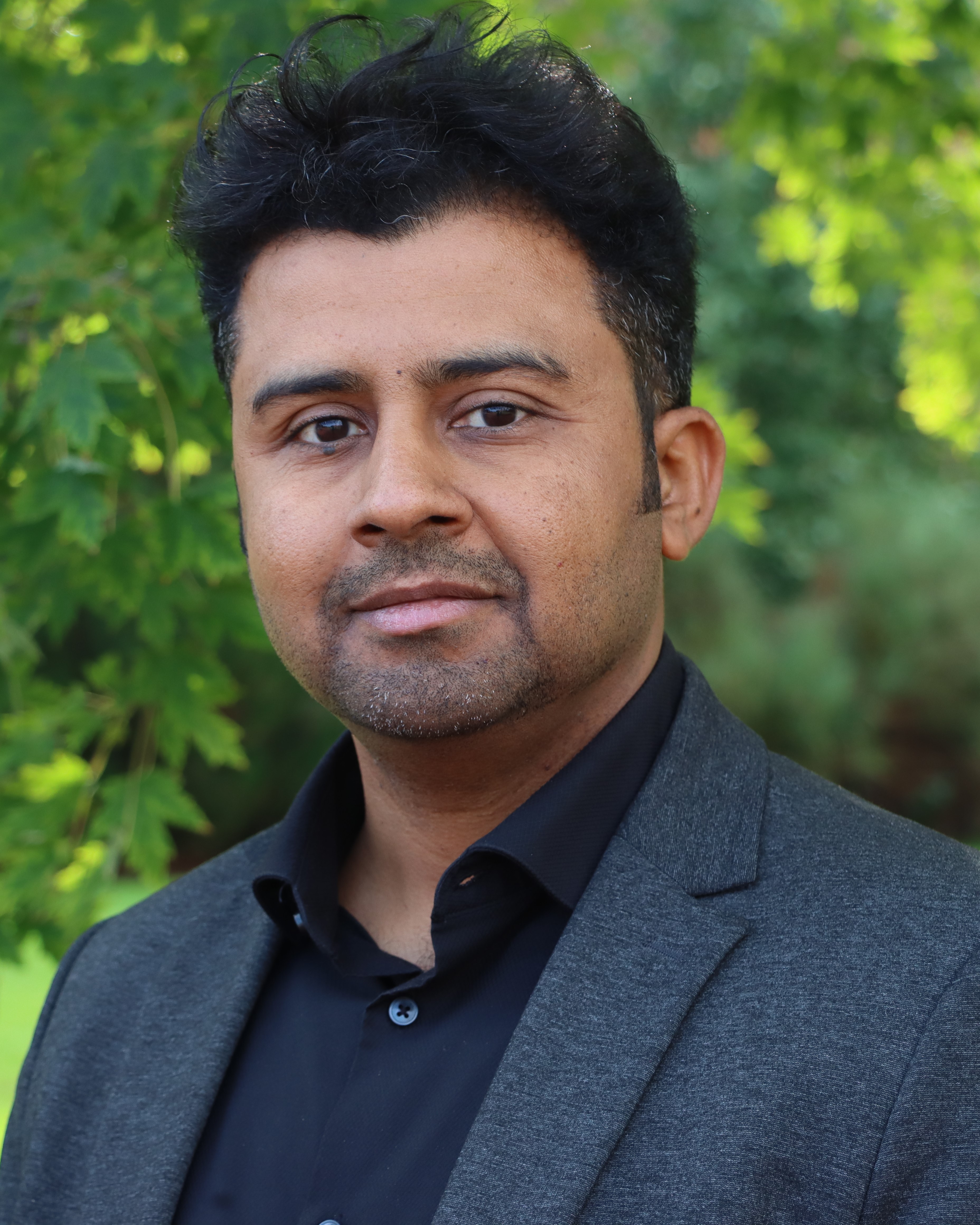
Ebrahim Bamanger
Teaching Assistant Professor of Arabic
What I do
As a Teaching Assistant Professor at the University of Denver, I coordinate and teach Arabic language and culture courses, including the First-Year Arabic Language sequence and the 2000-level Arabic series.In addition, I teach a variety of content courses such as From Iraq to Morocco: Arabic Culture and Society through Film and Minorities in the Middle East, which fulfills requirements for the Minor in Middle Eastern Studies. I also teach LANG 2000: Machines That Speak: Language, Identity, and Artificial Intelligence, a course that explores the intersections of language, identity, culture, and artificial intelligence. This course contributes to the Applied AI and Society Minor at the University of Denver and fulfills the Analytic Inquiry (AI) requirement.
Moreover, I serve as an Adjunct Professor with the Office of Internationalization, where I teach INTZ courses and contribute to international education initiatives across campus. Through these roles, my teaching and academic work bring together language education, culture, artificial intelligence, and global perspectives.
Specialization(s)
Arabic Language Education and Proficiency-Based Instruction<br>Literacy, Culture
Professional Biography
Ebrahim Bamanger holds a Ph.D. in Literacy, Culture, and Language Education from Indiana University, with minors in Instructional Systems Technology and Middle Eastern Languages and Cultures. Prior to joining the University of Denver, he taught at Indiana University and at Middlebury College’s prestigious Summer Language School. His teaching and research focus on Arabic language education, proficiency-based instruction, intercultural learning, and the integration of emerging technologies into language classrooms.
His research examines how language, culture, media, and emerging technologies shape the production and representation of Arabic and Arab identities. Across his work in Arabic language education, literary and cultural studies, and digital media, he is particularly interested in questions of linguistic representation, cultural belonging, and whose voices and varieties of Arabic are recognized, circulated, and valued. These questions connect three areas of his research: contemporary Arab cultural and media representations, Arabic and artificial intelligence, and Arabic language education and oral communicative competence.
A growing area of his research focuses on the use of artificial intelligence in language classrooms, with particular attention to its pedagogical possibilities, limitations, and ethical implications. He is interested in how AI can support language learning while promoting linguistic diversity, cultural representation, student agency, and responsible engagement with emerging technologies. Through his teaching and research, he seeks to foster critical and intercultural approaches to language education and empower students to engage deeply with Arabic and the diverse cultures of the Arab world.
Degree(s)
- Doctoral Studies, Curriculum & Instruction - Language Education, School of Education, King Saud University
- Ph.D., Literacy, Culture, and Language Education- Curriculum and Instruction , School of Education, Indiana University
- MA, Teaching of English to Speakers of Other Languages, Deapertment of Curriculum and Instruction, School of Education. King Saud University, 2013
Professional Affiliations
- American Council on the Teaching of Foreign Languages
- American Council on the Teaching of Foreign Languages
Research
Ebrahim Bamanger is a dedicated researcher and educator with a focus on language education, intercultural communication, and technology-enhanced learning. His research interests primarily lie in exploring the intersection of language acquisition and cultural identity, emphasizing the role of virtual environments in fostering collaborative learning among Foreign Language (FL) learners.
His notable work includes investigating attitudes toward using virtual reality tools, such as Second Life, in foreign language classrooms. This research highlights the potential of immersive technologies to engage students and enhance their language learning experiences. By leveraging digital platforms, Bamanger aims to create interactive and participatory learning environments that cater to diverse student needs.
Additionally, his publications contribute to the understanding of critical thinking in language education, focusing on the beliefs of pre-service teachers and their teaching perceptions. Through his studies, he has sought to identify effective pedagogical strategies that encourage reflective practices and promote higher-order thinking skills among learners.
Bamanger's commitment to inclusive education is evident in his exploration of the experiences of Muslim immigrants in multicultural contexts, where he applies a geocritical perspective to children's literature. His work advocates for the representation of diverse voices and narratives in educational materials, aiming to cultivate a more equitable and culturally responsive learning environment.
In recent years, he has expanded his research agenda to examine the integration of artificial intelligence in language classrooms. His work in this area explores how AI-driven tools can support personalized learning, enhance linguistic input, and provide meaningful, real-time feedback to students. Bamanger is particularly interested in how AI can complement communicative and intercultural pedagogies, ensuring that emerging technologies strengthen, rather than replace, human-centered teaching practices. Through workshops, symposia, and pilot projects, he aims to help educators make informed and ethical decisions about incorporating AI into language curricula.
With a solid background in instructional design and language pedagogy, Ebrahim Bamanger continues to contribute to the field through research, publications, and active participation in academic conferences. His ongoing projects aim to advance understanding in language education while fostering global citizenship and intercultural awareness among students.
Areas of Research
Language Education and Proficiency Development<br>Technology Integration in Language Learning (AI
AR